

Why More Fabricators Are Choosing Self Clinching Fasteners Over Welding

If your shop is still welding most of its connections, you've probably adjusted to the limitations. Workarounds. Secondary processes. Extra steps nobody would design on purpose but that became routine anyway.
Take one automotive shop PEM® worked with. Their technicians struggled to keep bolts aligned on a panel during welding, so they built a fix: hand-thread a nut onto every bolt to hold it in place, move the panel to the welding station and weld the bolts, then move back and remove the nuts. Three steps to do what should take one.
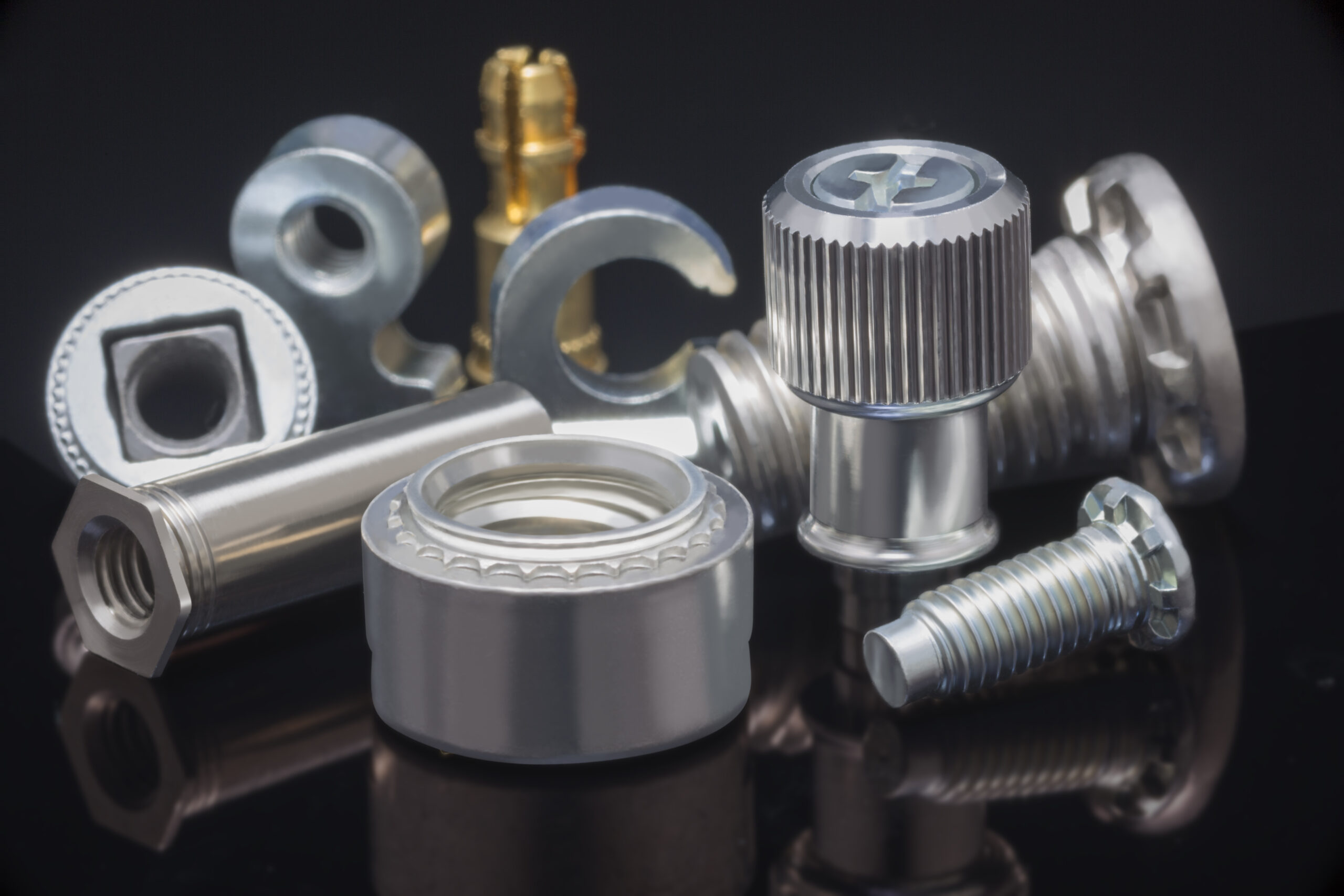
PEM® engineers helped the shop replace that whole sequence with self clinching fasteners, collapsing three steps into a single press operation. Stories like this point to a broader opportunity for metal fabrication and manufacturing shops. Many are still welding out of habit, not necessity. Here are the five biggest advantages self clinching fasteners offer over welding, and what to weigh before you make the switch.
1. Cost Savings That Add Up
Welding's price tag rarely shows up as one line item. There's labor to hold parts in position and run the weld, plus grinding, filing, and inspection afterward, each step adding time and money to the cost per piece.
Self clinching fasteners replace that entire sequence with a single motion: a press inserts the fastener, and the part moves on. Shorter install times mean more parts through your line per shift, and less post-processing means fewer hands touching each part before it ships.
At scale, that compounding effect is substantial. Shops that convert from welding to self clinching report 20–40% savings in total installed cost.
If you're evaluating fastening methods, it's worth looking past the per-unit fastener price and running the full total-cost-of-ownership math: labor, rework, and finishing included. That's usually where the real savings show up.
2. Stronger, More Reliable Joints
Welding depends on heat, and heat is inherently variable. Even with tightly controlled parameters, thermal joining can warp thin material, weaken the metal around the joint, and produce results only as consistent as the least careful welder on the line.
Self clinching is a cold-flow, mechanical process. The fastener forms its joint through pressure and material displacement, not heat, removing thermal damage from the equation entirely. In thin material, clinched joints can withstand higher loads than a comparable weld.
The result: fewer redos, more consistency, and less scrapped material. That matters most if your end products face quality audits or field-failure risk. A predictable mechanical process is easier to validate and defend than a thermal one that depends on operator technique.
3. Cleaner Finish in Fewer Steps
Spatter, discoloration, and the grinding needed to smooth a welded joint are all costs hidden inside "finishing." Change the fastening method, and those costs disappear with it.
Self clinching produces a clean, uniform result without extra steps - no spatter, no thermal discoloration, no grinding or filing before a part is ready for paint or shipment. If your parts are visible in the final product, enclosures, brackets, panels - that consistency reduces both labor and rejected parts.
For shops selling into industries where cosmetic finish matters, clinching offers a visual improvement that's easy to point to on the shop floor.
4. More Design Flexibility
Welding constrains design around what the process can physically do. Self clinching removes several of those constraints. It can join dissimilar materials, steel to aluminum, for example, and place joints in locations that are difficult or impossible to weld reliably. Fasteners install in tight spaces a welding gun can't reach, with thread positioning precise enough to hold tolerances a welded joint can't guarantee.
The range of applications is wide. Thread sizes span M1 to M10, covering everything from smartphone-scale electronics to heavy-duty automotive assemblies, letting a single fastening method follow a product across very different design stages, rather than switching processes as scale or material changes.
That flexibility gives your engineering team room to lock in a joining method earlier in the design process, rather than working around welding constraints later.
5. Safer and More Sustainable
Welding requires dedicated controls to manage heat, sparks, and fumes, usually meaning investment in local exhaust ventilation (LEV) and other safety infrastructure, plus the ongoing cost of maintaining it.
Self clinching eliminates the hazard at the source. It consumes less energy than welding, produces no toxic fumes, and generates no sparks or heat, translating to a safer floor for your operators and a smaller environmental footprint, with no trade-off in joint strength.
As more manufacturers face pressure to report on energy use and workplace safety metrics, this is an increasingly relevant number to have in hand and one that's easy to quantify as you weigh the switch.
What to Look for in a Clinching Partner
Switching from welding to self clinching isn't plug-and-play, and treating it that way is where conversions go wrong. It takes proper tooling and calibration to get consistent results, especially if clinching is a new process for your shop.
This is where your choice of supplier matters. Be cautious of suppliers who sell only fasteners or only tools, self-clinching success depends on both being correctly matched to the application. Look for a manufacturer that invests in training and hands-on support, not just a transaction, to help you actually realize the savings and reliability the technology promises.
PEM® takes a holistic approach, offering fasteners and tooling designed to work together, with PEM experts working alongside shop teams through calibration and implementation.
Making the Case Inside Your Shop
Eliminating even one workaround step saves time on every unit you produce. Multiplied across a production run, that adds up to a substantial advantage.
If you're weighing the switch, bring self clinching into the conversation early - during design and process planning, not as an afterthought decided late in production.
As more manufacturers look to cut costs and improve reliability without sacrificing throughput, self clinching fastening is positioned to take a growing share of applications that previously defaulted to welding. Shops that understand the technology, and that partner with manufacturers offering genuine engineering support, are well positioned to capture that shift.